
Douglas County Weekly Arrest Sources
The Douglas County Sheriff's Office posts no weekly, 72-hour, or multi-day booking feed. The county inmate roster is the official custody source. It sorts by name. There is no date-window filter. Booking dates and statuses sit mixed together. So the roster cannot be relabeled as a weekly arrest log or used to count arrests across a chosen span. Echo Press offers the strongest local multi-day coverage, a law-enforcement blotter spanning three dates. It splits items between the Douglas County Sheriff's Office and the Alexandria Police Department. Each entry lists incident dates, categories, locations, and brief descriptions. The paper states plainly that its recap of daily calls for service is not comprehensive. That makes it news context, not an official booking ledger.
Read the Douglas County Blotter
Start any multi-day read with the date range and the publisher. Then find the agency section. An Alexandria Police item may describe a call that never ended in a booking. A sheriff item may involve service outside Alexandria. Since the publisher warns its recap is incomplete, a missing incident proves nothing.
- Read the article date and the exact dates covered by the recap.
- Identify whether the item sits under the sheriff or Alexandria Police heading.
- Separate incident type and location from any claim that a person was jailed.
- Check the official county roster when current Douglas County Jail custody is the question.
- Use the county Records Division for an older booking or agency report.
- Follow a known case through Minnesota Court Records Online for the disposition.
A disposition is how the case ends. It may involve amendments, dismissal, a plea, trial, or sentencing. A short blotter line cannot carry that whole sequence, and a roster status explains nothing about later court events.
Douglas Arrest Log Entry Fields
The newspaper blotter and the jail roster show different fields. Treating them as interchangeable invites false conclusions, and the comparison below sticks to what each source actually provides.
| Source field | What it means |
|---|---|
| Covered date | The date tied to a news item, not necessarily a jail booking time. |
| Incident category | A brief calls-for-service label, which may not involve an arrest. |
| Location | The place reported in the recap, not proof of where booking occurred. |
| Agency section | Distinguishes sheriff material from Alexandria Police material. |
| Booking date and time | A jail-roster field marking intake after an arrest. |
| Charges and status | Booking charges and a changing custody snapshot, not final judgment. |
| Photograph | No booking image was visible in either captured public interface. |
The roster also names the arresting agency. One booking can carry several charge rows, so row counts are not arrest counts. An as-of date appears, but no fixed refresh rate or online retention period is published.
Weekend Douglas Arrest Reporting
The Echo Press example spanned several dates and ran after they passed. That shows an editorial multi-day format exists. It does not promise a daily or weekly schedule. Subscriber access may also gate an article. No source backs a Monday dump of all weekend events, a set publication time, or a fixed holiday pattern. One timing fact is separate. Douglas County booking guidance says people arrested on a weekend generally see a judge Monday morning. Jail staff do not control the judge's schedule. That is a likely court appearance, not a weekly arrest log posting. Holidays and court calendars can shift things. Court Administration answers questions about a specific hearing.
Note: A weekend rise in calls, roster entries, or articles cannot be assumed without a complete sourced dataset.
Echo Press Arrest Context
The Echo Press multi-day blotter displays the covered span and both local agency sections.
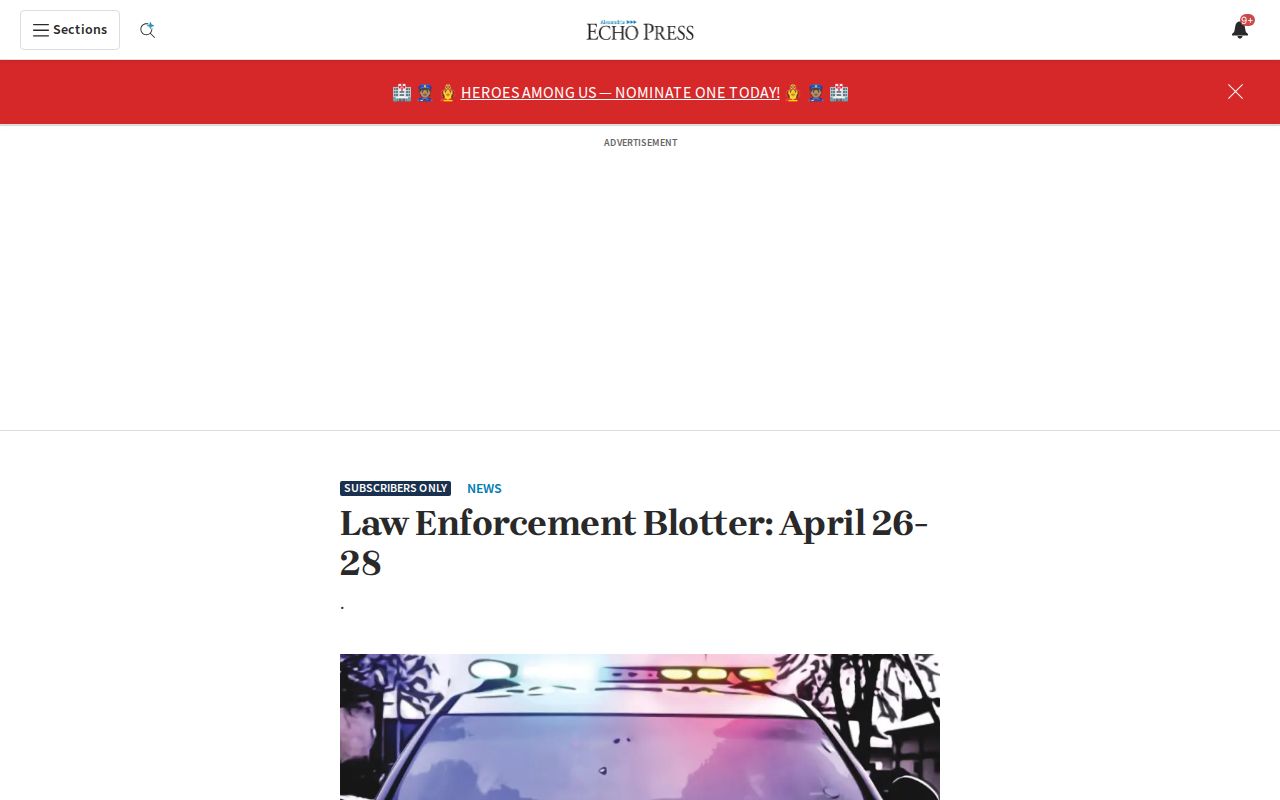
The article demonstrates local editorial coverage. Its own disclaimer keeps it from being mistaken for a full arrest list. No Douglas County newspaper mugshot gallery exists. The article image is generic blotter artwork, not a booking photograph. A headline or brief incident note reveals nothing about custody. Current custody status belongs with the county jail. A booking photo not shown online may be requested from Sheriff's Records under the applicable data rules.
Douglas Arrest Archives
The public roster says nothing about how long an entry stays online. It does not say where it goes after release. A missing name could mean release, transfer, or refresh. It could also mean a protected category or another holding agency. It does not mean the record was destroyed, dismissed, or sealed. For an older booking, ask Douglas County Records about the underlying record. Ask about the schedule that applies. The official Records Division page shows the county request methods and response standard.
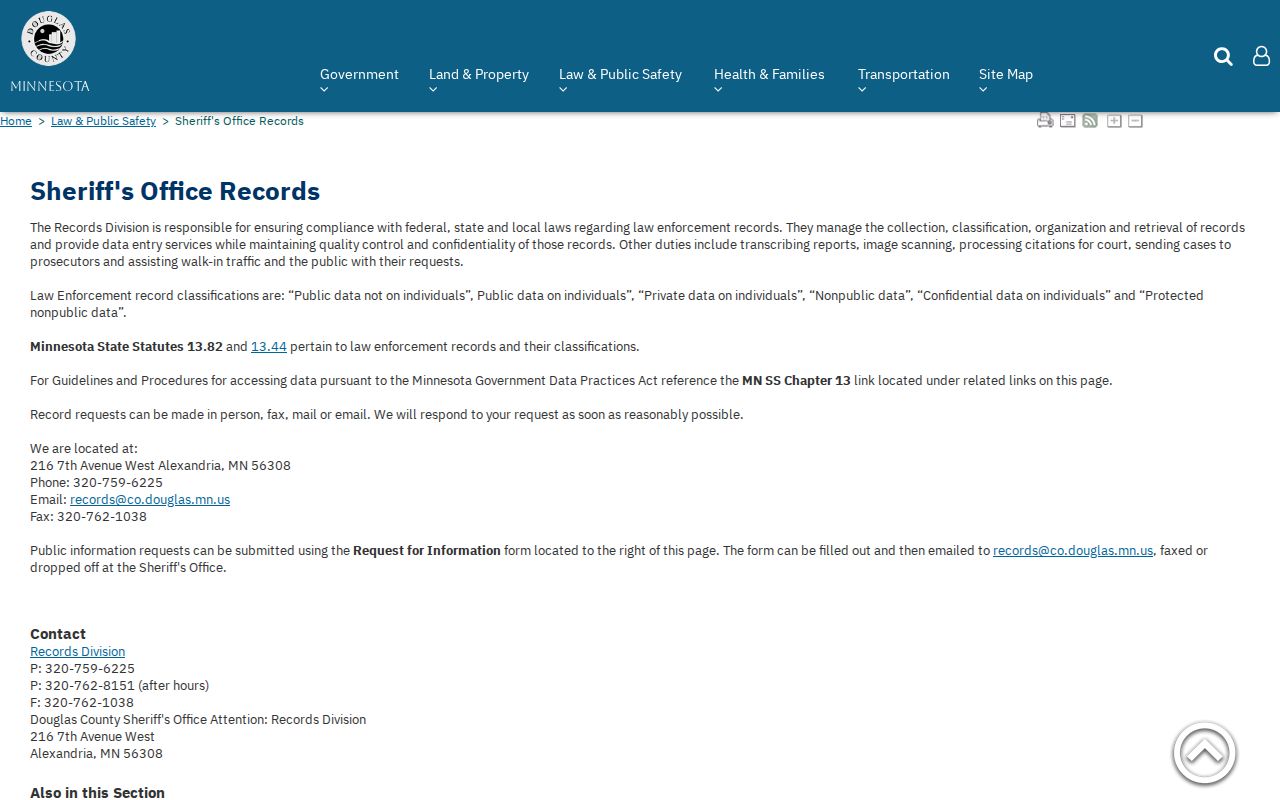
This route reaches records past the public roster window without an unofficial archive. Give the full name, an approximate date, and the arresting agency. Include any booking, incident, or case number. Say whether you want a booking record, an agency report, or a public booking photograph. The county lists no fixed photo fee. It gives no guaranteed turnaround either. Ask about current reproduction costs and electronic delivery.
Minnesota Arrest Record Retention
Minnesota State Archives guidance describes county records schedules and historical law-enforcement series. Jail registers can hold chronological commitment and discharge facts. They can also hold prisoner identity details, the arresting officer, charge, and sentence. The guidance sets no single Douglas County retention term. It sets no one term for every modern digital booking image. The State Archives government-records page explains schedules and where to take agency record questions.
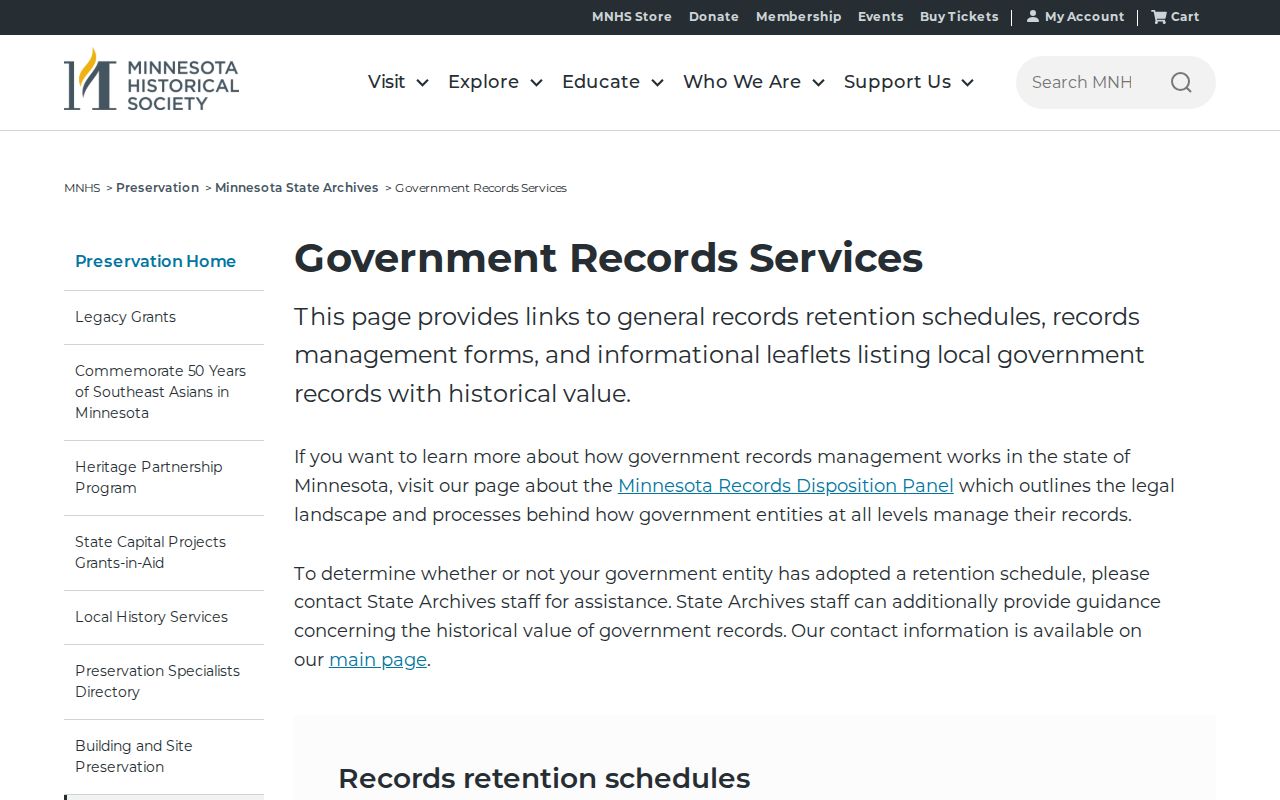
Some older Douglas County arrest records end up in the state archive system. That happens once the county confirms a record series exists. The county must also approve the transfer. Start your request with county Records if you want something recent. For an older series, State Archives is the place to call.
Give them the county, agency, and date range. Add the person or incident involved. Name the record type too. Douglas County has no online historical mugshot collection. So an archive request may yield paper, not a booking photo.
Official and Unofficial Arrest Records
Start with the sheriff or the arresting agency. Minnesota courts come next when you want a case result. Local reporting adds context. Unofficial sites belong at the bottom of the list. The Daily Arrest Report walks through that same-day intake and roster sequence. That sequence stays separate from this page's wider records and archive treatment.
JailExchange runs a Douglas County bookings page that points toward official resources. It is not sheriff-operated, though, and it cannot tell you when a roster entry changed. Commercial directories are in the same boat. None of them can replace the official roster, the Records Division, or MCRO.
Third-party pages also go stale. Some omit changes. Some keep an old entry after the Douglas County roster has moved on. Copying names or images from them is a bad idea. A Mugshots.com section for Douglas exists. Official sources should always lead. No unofficial booking photo belongs here.
Douglas Arrest Outcomes
What happens after a Douglas County arrest is up to the courts. Charges can change, shrink, or vanish once a booking lands on the roster. To track a case, Minnesota Court Records Online lets you search by name, case number, citation, attorney, filing date, or category. You can narrow results to Douglas County. Remote access is not complete. Some pending criminal matters stay hidden from a defendant-name search.
A blank result does not mean no case exists. Try a known case number instead. You can also call the courthouse or ask about in-person access. Douglas County Court Administration answers hearing questions at 320-304-6050. The full court register and any public filed documents tell you far more. No custody status comes close.